Showing posts with label teaching and learning. Show all posts

Monday, April 18, 2011

Green Actions for Earth Day 2011


"From Dublin to Palo Alto via Milan, Colombia, and London, with world records and airships, in English, Spanish, Hebrew and Chinese, Facebook got a clear message this week, delivered in many ways – it's time the world’s largest social networking site connected its 600 million users to renewable energy, not dirty, dangerous coal and nuclear."

Greenpeace

The message was also spreading in the main square of Milan, Italy with the unfurling of a huge Facebook: Go Green banner. 

Greenpeace volunteers in Italy have been gathering support from Facebook users across Italy, check out the fun video of their activities.


Earth Day 2011 is April 22. It's only a few days away. Actions like this one can be important to support this year Earth Day's theme: A Billion Acts of Green!

Well, in a different way, schools can organize an Earth Day event.


Earth Day 2011


"What can you do? Earth Day events are limited only by your imagination."

There are millions of things you can do locally to have fun and foster positive change in your school. 

Read about a pedagogical project for Earth Day 2008 


Speaking about green acts and about volunteering, Portuguese students are called to volunteering to help the forests since 2005.
The program aims to educate young people to Environmental problems. And each year there are more and students who are volunteering.


2011 is the International Youth Year, International Year of Forests and European Year of Volunteering, more than 5.000 Portuguese young people are involved in this year program that began April 1st and goes until November 30, 2011.

As you can see, it is a very interesting program to teach about Nature in a civic act. Students learn and help saving forests.  


For more information about the program, please visit a green project by my students: Torrinhas Verdes


"Sir David Attenborough has voiced his concern about children's declining knowledge of the natural world"


Do you share the same opinion? Do you think that your students decline knowledge of tha natural world? 

I just can say that students are very curious to learn about natural world and they are engaging themselves in green acts, more and more each year!


G-Souto
18.04.2011
Copyright © 2011G-Souto'sBlog, gsouto-digitalteacher.blogspot.com®

References:

Earth Day 2011

Greenpeace


Thursday, March 3, 2011

I would love iPad 2 in the classroom!


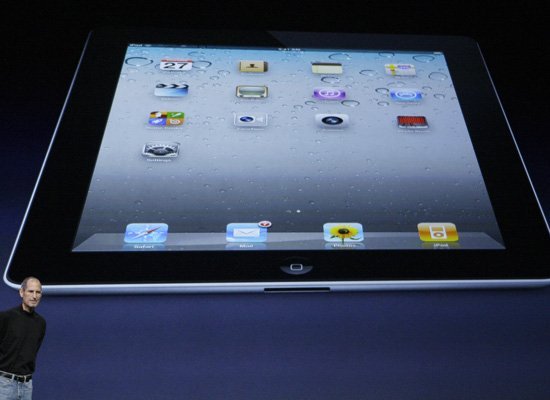
CEO Steve Jobs presenting iPad 2

Here it is! iPad 2 the fabulous device! 
Do you remember my 1st post about "iPad features and education" July 10, 2010 here. I wrote "we are looking forward to experiment this amazing media device! Don't you think? It's like love at first site!"


Now, it's even better! The CEO Steve Jobs himself was there to present iPad 2!  


"Apple CEO Steve Jobs declared the end of the PC era today as he unveiled the iPad 2. And he touted the educational benefits of the iPad in his presentation, highlighting in one video the impact that the device has had in particular on autistic children."
So is the iPad 2 ready for the classroom? Let's see...


The iPad 2, unveiled yesterday, addresses even more of the drawbacks of the iPad as an educational device.

The iPad 2 has two cameras. The addition of GarageBand and iMovie - two very popular pieces of software in the classroom - will enable students to create multimedia projects. Wonderful!


iPad 2 (features)

Reading Alice in Wonderland, Prince of Persia,  'Jack and the Beanstalk', 'Aesop's Fables', or 'Tangled' is like to enter in another dimension. True, right?


But children's books are all about big, splashy pictures and wild colors elements perfectly suited to iPad screens. Needless to say, the iPad can do a lot more than just display static pages. It can read stories aloud, it can enrich a classic tale with touch-powered extras, and it can even render pages in 3D (not suitable for chidren under 6-7 years old).

When students are reading a book, they may to do marks, highlights and notes. The users of iBooks can also read and right PDF directly in the application.  Reading children's literature, that's amazing. Yet even with all the extras, reading is so natural on iPad, the technology seems to disappear.


iPad 2/ Apple
http://images.apple.com

Many of the limitations that make the device ill-suited for the classroom have already been addressed - through various iOS upgrades and by the explosion of educational apps and e-books. The iPad now has multi-tasking (sort of). 


Students can print. They can learn the narrative text, learning foreign languages, playing video games - Majin and the Forsaken Kingdom, learning Biology, Geography and Music - Arcade Fire, funny and pedagogical, Art - The Google Art Project... 


Literature, Science, Geography, Sport, Music, Art, the fundamental curricula on iPad! All in a device and such good apps! 


And what about search in real time, news, magazines, Google maps, social networks ( Facebook, Twitter), work (Google docs). All these features offer teachers and students a delicious motivation push!  


"iPad apps are expanding the learning experience both inside and outside the classroom. From interactive lessons to study aids to productivity tools, there’s something for everyone."
Apple in Education

The addition of the HDMI cable will mean that iPad content can be connected to a HDTV (which really isn't the projection device that most teachers have in their classrooms), but... it's a start!

iPad 2 (gallery)


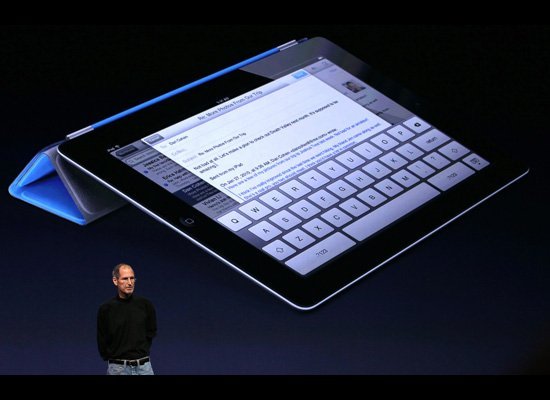
'It's necessary to hold iPad with both hands. When we write on Ipad is a bit boring because finger touches stay on screen and the reflexs too', I wrote. Well... not anymore! Like Apple says: 'Less in your hands, more at your fingertips.'

"iPad 2 and iPad Smart Cover are made for each other. Literally. Built-in magnets draw the Smart Cover to iPad for a perfect fit that not only protects, but also wakes up, stands up, and brightens up your iPad. That’s not just smart. It’s genius."

Now students are managing to do more than simply "consume" via the iPad. And whether the iPad is just a shiny, engaging, but expensive novelty, if nothing else, trading in a backpack full of textbooks for a 1.3 lb tablet is a win for students' physical well-being. It's a good reason!


iPad 2 apps

Has Apple, already the beneficiary of a lot of good will from teachers, shown today that it's ready to take on the challenges of bringing iPads into the classroom? 

The cost of the new iPad is beyond many educators and students reach - oh! God! What a pity! - There are no educational discounts in iTunes.


After this video, and reading, during the past year, some successful reports of schools piloted iPad programs, students are managing to do a lot via the iPad. 

So, as an educator, I can say that iPad will "change the learning landscape"! iPad 2 will change completely the way educators an students will move in classroom!

A new and 'delicious' media world to use on Education! No more backpack full of texts books! Not completely... books are always need but in a less number.

With iPad 2 new features and apps, young people will love to have an iPad 2 on their table in classroom ! Exciting!

Me too! I would love to have iPad 2 on my work table!

G-Souto
03.03.2011
Copyright © 2010G-Souto'sBlog, gsouto-digitalteacher.blogspot.com®

Credits: Apple, iPad 2

References:

ReadWriteWeb, Audrey Watters, 'Will the iPad 2 Make the Grade for Classroom Usage?'

Souto, Gina, 'Ipad features and education'

Souto, Gina, 'And now, Alice for iPad'

Souto, Gina, 'Prince of Persia, an interesting narrative text'

Souto, Gina, Dr., 'EFQUEL Innovation Forum Lisboa 2010'


Thursday, February 3, 2011

Learning without Frontiers, an interesting session


A unique audience question and answer session with Lord David Puttnam and Jimmy Wales about learning and technology facilitated by Learning Without Frontiers founder, Graham Brown-Martin.


G-Souto
03.02.2011
Copyright © 2010G-Souto'sBlog, gsouto-digitalteacher.blogspot.com® 


Credits: Blip TV, 27.01.2011

References:

edugeek


Monday, January 24, 2011

Some apps for iPad helping education


Some apps for iPad helping your learning skills in school! Interesting apps and well demonstrated.


G-Souto
21.01.2011
Copyright © 2010G-Souto'sBlog, gsouto-digitalteacher.blogspot.com® 


Credits: (included in video presentation)


Sunday, January 16, 2011

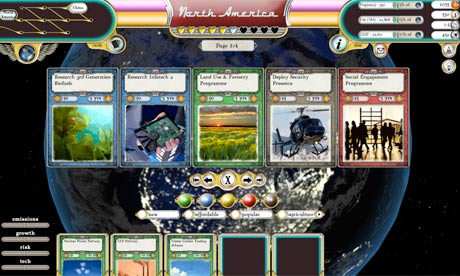
Fate of the World game


Fate of the World game
http://fateoftheworld.net
"A diferença entre um jogo de impacto social e os meios tradicionais - livros, documentários, peças de teatro, etc. - é que sobre o mesmo assunto estas são todas experiências passageiras. Mas nos jogos pode-se 'calçar os sapatos' de uma perspectiva diferente e fazer escolhas significativas"

Jeff Ramos


Photo: Red Redemption

Fate of the World is a dramatic global strategy game that puts all our futures in your hands. The game features a dramatic set of scenarios based on the latest science covering the next 200 years. You must manage a balancing act of protecting the Earth’s resources and climate versus the needs of an ever-growing world population, who are demanding ever more food, power, and living space. Will you help the whole planet or will you be an agent of destruction?


"But if people can feel and see the evolution of variables in a system – such as a changing climate – it can be a better way of learning than reading lots of scientific prose."

Tom Chatfield


Climate Challenge

Fate of the World is the sequel to the popular BBC Climate Challenge played by around 1 million people all over the world. 
BBC Climate Challenge was winner of Best European Green IT Award 2008, DEFRA Climate Challenge Award, Serious Games 2009 Finalist, Games For Change 2008 Finalist, EuroPaws 2008 Finalist.


"Fate of the World" is brought to you by the award-winning 'Red Redemption' games team including Executive Producer Klaude Thomas (Battlestations: Midway), Lead Designer Ian Roberts (BBC Climate Challenge) with climate modelling by Dr Myles Allen (University of Oxford), writing by David Bishop (Dr Who, 2000AD), music composed by Richard Jacques (Mass Effect, Alice in Wonderland) and gameplay direction by veteran game designer Matthew Miles Griffiths (Conflict: Desert Storm, Battlestations: Midway, Cannon Fodder GBC, Futurama, Thunderbirds GBA). 

Read the review in The Guardian/ Environment (December 2010).


Education:


It's certanly  a wonderful tool in Sciences and Civics curricula. It could be useful to the students in independent choosing  wich each one helps the planet or is an agent of destruction. 
It would motivate students' awareness to the problems of the environment, preparing them to be active ecological citizens.

"Serious Games is a movement that aims to use new gaming technologies for educational or training purposes. It investigates the educational, therapeutic and social impact of digital games built with or without learning outcomes in mind. This movement has emerged to meet the needs of a new generation of learners."

Digtal Games in School


"Video games are an ideal, natural medium for learning." 

David Samuelson 


G-Souto
17.01.2011
Copyright © 2010G-Souto'sBlog, gsouto-digitalteacher.blogspot.com® 


References:
Vaughan, Adam, Climate change chalenge for computer games, 31.10.2010

Digital Games in Schools, May 2009
http://games.eun.org

Abreu, Bruno, Videojogos descobriram um novo adversário: as alterações climáticas, DN/ Ciência, 21.11.2010

Wednesday, November 10, 2010

The Engage Quality Awards 2010


http://www.engagelearning.eu

The ENGAGE Quality Awards recognise excellent contributions from teachers, educational practitioners, game developers and producers to the quality of game-based learning. The aim of the awards is to make the quality issues related to games and learning process by using GBL a visible topic and to increase the awareness amongst learning organizations, schools, teachers, learners, educators and practitioners, industries, and players about the educational potential of GBL.
The Engage Quality Awards will be granted in three categories:
Best Practice Award
Learning games Quality Award
Games inclusion Award
The deadline for submissions to the "ENGAGE Quality Awards" has been extended until 15th November 2010. For further information, read here


Computer games are beginning to break out from their console and entertainment world, and finding more constructive applications in the worlds of business and education. 

Using video games to supplement and inspire in-classroom education is more and more used for pilot teachers who try out new school models. 


Pilot teachers are finding ways to use video games to enrich and inspire interest by students in core curriculum topics.


Be a pilot teacher! 


"We have been consistently impressed and surprised at how leading  educationalists  have been adapting off the shelf video games to engage their students in rich leaning experiences“.

David Yarnton, 2010, Nintendo UK


G-Souto
10.11.10

Copyright © 2010G-Souto'sBlog, gsouto-digitalteacher.blogspot.com®

References:

EuroNews

Monday, November 8, 2010

Academic eLearning Forum à Paris


La 1ère édition de l'Academic eLearning Forum se tient les 8 et 9 novembre 2010 au CNIT, Hall Pierre Curie, dans le cadre des Rencontres ICC (Innovation, Compétitivité, Connaissance) www.ICC2010.info. 


L'AELF réunit des professionnels internationaux du e-Learning pour une série de conférencess et tables rondes inédites en France et dédiées exclusivement au monde de l'éducation.

Les objectifs du Forum:

1. Réunir tous les acteurs français et européens du secteur du eLearning académique afin de partager les expériences et les connaissances, créer des nouvelles synergies et engager des nouveaux projets et collaborations. 

2. Faire le point sur l’état de l’art du eLearning dans l’enseignement en France et établir des comparaisons avec d’autres systèmes d’éducation nationale en Europe (faits et chiffres). 

3. Découvrir les nouvelles technologies d’apprentissage et les solutions disponibles, au travers de l’exposition, des conférences (études de cas, démonstrations et ateliers de découverte). 

4. Comprendre le marché du eLearning académique. Quels en sont les acteurs, les enjeux, les modalités de déploiement et les facteurs clés de succès (best practices, mesures de la qualité de l’apprentissage…). 

5. Prévoir l’avenir – bénéficier des échanges et des interactions entre les participants pour élaborer des scénarios d’évolution du secteur. 

Pour que la pédagogie reste au centre de la démarche, les contenus occupe une place de toute première importance. Mais aujourd’hui, la synergie entre contenus et technologies est impérative. Au-delà des plateformes collaboratives, interactives, de nouveaux medias s’invitent : internet mobile, réseaux sociaux… Quels sont les moyens concrets pour profiter pleinement des avantages de ces nouvelles solutions ? 


Le Forum  a été conçu pour interagir, échanger et créer de nouvelles connaissances. Alors différentes méthodes de participation ont été proposées:

- « Keynotes » et séances plénières pour sujets stratégiques 

- Tables Rondes et débats avec experts et participants 

- Ateliers interactifs avec présentations, échanges et démonstrations 


Eh bien! Cétait dans ce contenu que Sally-Anne Moore directrice et fondatrice de "iLearning Forum Paris" 2010 m'a gentiment invité de participer et animer deux ateliers pour professeurs.

L'AELF 2010 était prévu pour le 12-13 octobre 2010 à la Grande Arche de la Défense. 
Mais l'organisation a dû penser à un autre lieu et une autre date, suite à la fermeture du Toit de la Grande Arche jusqu'en janvier 2011. Tout ça lui fut tardivement communiqué. Date définitive les 8-9 novembre 2010

J'avais prévu deux ateliers interactifs, durée 45 minutes, le 8 et le 9 novembre.


Photo: Paul Sakuma/AP

Le 8 novembre à 16 heures sur la thématique "Création de contenus par les enseignants : quelles solutions et formations pour les enseignants, stratégies, partages et développement". 

Et le 9 novembre à 14:45 "Le eLearning change-t-il la donne ? Nouveaux rôles nouvelles compétences des enseignants".


Photo: LLuis Gene/AFP

Pour moi, ce serait formidable de participer à cette fantastique expérience! Ce serait une excellente opportunité de visibilité en plus. Et puis francophone! Je me sentirais tout à fait à l'aise et bien heureuse de pouvoir partager des connaissances et des expériences.


Malheureusement, avec le changement de date, je fus obligée d'annuler ma participation et donc les deux ateliers prévus. D'autres participants ont eu certainement le même problème.

D'ailleurs, je crois que l'organisation a beaucoup souffert avec le changement de date et lieu. 

À Sally-Anne Moore tous mes remerciments d'attendre jusqu'à la dernière minute ma confirmation à AELF Paris 2010, après le changement de date. J'espère bien y être la prochaine édtion.


Professeurs et étudiants expérimentent de nouveaux modèles pédagogiques. Ils constituent un espace de communication basé sur le partage de contenus, adapté aux nouveaux besoins et demeure à portée de mains de l’apprenant. C’est ce nouvel environnement qui assure à l’apprenant une flexibilité et une certaine autonomie d’apprentissage.

Le Web 2.0 y compris les OER, GBL et Mobile learning a mis en lumière une nouvelle gestion du savoir. Les apprenants deviennent de plus en plus acteurs de leur formation pédagique qu'ils acquièrent avec différentes compétences à l'aide du e-professeur.


Photo: Kindlee-readers/AP

"L’empreinte numérique de la connaissance se dessine et se ramifie progressivement.

À reconnaître l’apprentissage informel et à le catalyser, à miser sur la mobilité et l’accès direct aux ressources pédagogiques."

Isabelle Dremeau, Panorama du web 2.0
décembre 2007

G-Souto
08.11.10
Copyright © 2010G-Souto'sBlog, gsouto-digitalteacher.blogspot.com®