Showing posts with label Google Doodle. Show all posts

Tuesday, April 26, 2011

Google célèbre Jean-Jacques Audubon


Aujourd'hui Google doodle rend hommage à Jean-Jacques Audubon, célèbre ornitohologue. naturaliste et peintre américain d'origine française. 
Il est né le 26 Avril 1785 aux Cayes (Saint-Dominique. Il est consideré comme le premier ornithologue du Nouveau Monde.

Il se passionne très jeune pour l'histoire naturelle. Il a été élevé en France, à Nantes, non loin de là à Couëron, par sa belle-mère, Anne Moynet Audubon.

Il part aux États-Unis et devient contremaître dans une ferme près de Philadelphie. Il commence alors à étudier l'histoire naturelle en dirigeant la première opération de baguage du continent. 
Il noue un fil à la patte d'une moucherolle (Sayornis phoebe) et remarque ainsi que ces oiseaux reviennent nicher chaque année aux mêmes endroits.


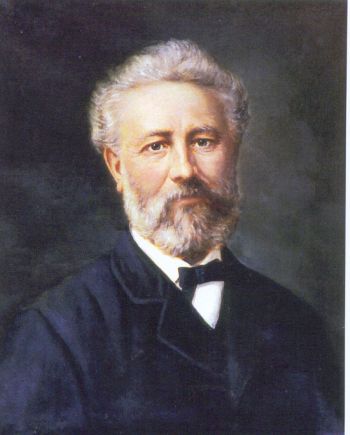
Jean-Jacques Audubon

Il commence également à dessiner et à peindre des oiseaux.   Il a cherché un éditeur pour ses dessins d'oiseaux à Philadelphie, mais sans succès. Peut-être at-il attiré l'inimitié des sommités scientifiques de la ville, membres de l'Academy of Natural Sciences.

Alors, il part à Londres avec son portfolio et son succès fut immédiat. Il est fêté comme « l'homme des bois américain » et récolte suffisamment d'argent pour publier "Les Oiseaux d'Amérique" entre 1830 et 1839.
Son ouvrage, remarquable par l'exactitude des détails et par la beauté de l'exécution, se compose de quatre volumes contenant 435 planches grandeur nature peintes à la main.

Jean-Jacques Audubon


Audubon a été élu membre de la Royal Society, suivant ainsi Benjamin Franklin qui en fut le premier membre américain. 

Pendant son séjour à Édimbourg à la recherche de souscriptions pour son livre, il fait une démonstration de sa manière d'utiliser des fils pour déployer les oiseaux devant la Wernerian Natural History Association du professeur Robert Jameson. 

Un étudiant nommé Charles Darwin faisait partie du public.

John James Audubon State Park (Kentucky, USA)

Il est revenu en Amérique du Nord où il poursuit ses expéditions et achète une propriété sur l'Hudson, aujourd'hui Audubon Park.

Il est mort le 27 janvier 1851 à New York. LaMassachusetts Audubon Society, la première parmi les nombreuses sociétés savantes Audubon, a été fondée et nommée en son honneur en 1896.

Éducation:

De très belles références pour étudier dans les cours de Sciences Naturelles!

  • Audubon's Birds of America ici

  • Article John James Audubon's 226th birthday celebrated by Google sur The Guardian, Ben Quinn


G-Souto
26.04.2011
Copyright © 2011G-Souto'sBlog, gsouto-digitalteacher.blogspot.com®

Références: 

Jean Jacques Audubon


Monday, February 7, 2011

Google Doodle celebrates Julio Verne


Google Doodle Jules Verne 183rd birthday
(08.Feb.2011)


Today, Google celebrates the 183rd birthday of one of the most important  children's author, Jules Verne, who wrote fantastic novels like Twenty Thousand Leagues Under the Sea (1870) and Around the World in Eighty Days (1873), among many others. Google is celebrating the occasion with an interactive doodle.


It's beautifully designed and it also has a little secret! It lets you navigate down 20,000 leagues under the sea. All you have to do is drag a lever with your mouse, tap your arrow keys, or - if you're viewing the Google page on an iPad, iPhone - tilt the screen.*


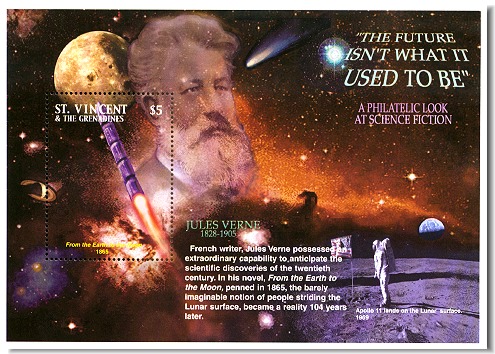
Jules Verne

Jules Gabriel Verne was born on February 8, 1828 in Nantes, in France. His novels (basically science-fiction) were all about his vision, as he wrote stories on space and underwater travel, even before spaceships and submarines existed. He is the pioneer of science-fiction genre. 

See an interesting biographical video (French) here

Verne wrote about space, air, and underwater travel before air travel and practical submarines were invented, and before practical means of space travel had been devised. 

He is best known for novels such as Twenty Thousand Leagues Under the Sea (1870), A Journey to the Center of the Earth (1864), and Around the World in Eighty Days (1873).


Verne's stories, written for adolescents as well as adults, caught the enterprising spirit of the 19th century, its uncritical fascination about scientific progress and inventions. 

His works were often written in the form of a travel book, which took the readers on a voyage to the moon in From the Earth to the Moon (1865) or to another direction as in A Journey to the Center of the Earth (1864). Many of Verne's ideas have been hailed as prophetic. 

The pioneering ways of travel and exploration which he wrote so much about are now common-place for us, such as exploration of the moon, the north and south poles, and the use of hot air balloons for long-distance voyages. 

In his time, Verne was a true inventor and visionary; the names of his inventions and characters such as Captain Nemo, Phileas Fogg, and the submarine Nautilus have entered, and remain, a part of our popular culture.


Journey to the Center of the Earth (2008)
Among his best-known books are Twenty Thousand Leagues Under the Sea (1870) and the classical adventure story Around the World in Eighty Days (1873).

He wrote numerous short stories, essays, plays, and poems, alongside 54 extremely popular novels that only show a glimpse of the extent of his imagination.

For over 40 years Verne published at least one book per year on a wide range subjects.  Verne's oeuvre include 65 novels, some twenty short stories and essays, thirty plays, some geographical works, and also opera librettos. 

Verne's works have inspired a number of film makers. Some of his books have been made into movies and now into games.

He remains the most translated novelist in the world, according to UNESCO statistics.

Verne is often hailed in level with Hugo Gernsback and H. G. Wells, as the "Father of Science Fiction."


Education :

  • Reading: Choose a novel with your students to read in classroom;
  • Writing: Let your students explore Jules Verne's home website (English, French, Spanish, Italian) on their smartphones for an  essay about the author;
  • Drawing: Students could create a comic strip from a novel;
  • Web: Explore the possibility to let your students build a web blog in a exchange project with a French school;
  • Web 2.0: Find school partners on Facebook or Twitter;
  • Multimedia: 
1) Cartonize Jules Verne - the biographical essay, or the novel that your students  have read, could be cartonized with Convert to Cartoon, an easy way to create cartonized versions of images and drawings (students and educator)

2) Create a video with Animoto (students and educator)

An now, see below the creative 3D video animation inspired in Jules Verne's work


G-Souto
08.02.2011
Copyright © 2010G-Souto'sBlog, gsouto-digitalteacher.blogspot.com®


References:

Centre International Jules Verne

Wikipedia/ Jules Verne

Jules Verne

via @wwwery_

* via Rosa Golijan